2026 Election Results Across the Foothills and Western North Carolina

Blue Ridge, Appalachia, High Country, and Smokies: What’s the Difference?
Originally featured in the 2025 Foothills Digest Furniture issue, “Come Sit a Spell” (Issue 30, pages 28–35). This online edition draws on our original reporting and interviews, with updated visiting and class information for November 2026. The magazine images below show the original printed story and photography.
Chairs tell stories if you know how to listen. In the hills and valleys of Western North Carolina, a chair was never just a place to sit. It was a place to rest, to welcome neighbors, to carry a family’s mark across generations.
The old makers knew the difference. Birdie Mace, one of Madison County’s master craftsmen, liked to say, “If company comes, and you don’t want ’em to stay long, bring out a ladderback. But if you want ’em to set a spell and visit, you offer a settin’ chair.”
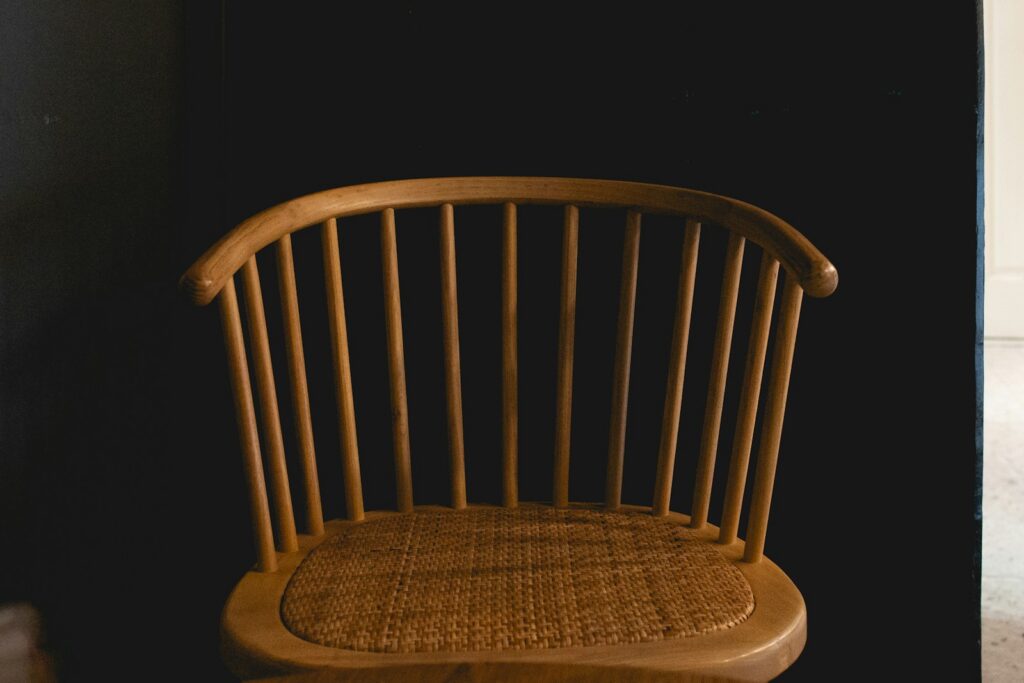
The settin’ chair is our region distilled: bent posts, carefully fitted rungs, and seats woven from bark or corn shucks gathered after harvest. Every one of them was made to be leaned into, to last, to outlive the people who shaped it. And this tradition was never just a single line passed down from one hand to the next. It spread across the mountains, each small town with its own maker and each family bending wood and weaving seats in its own way.
That web hasn’t broken. It stretches into the present through the hands of Brandy Clements and Dave Klingler, the self-described Chair Nerds behind the Silver River Center for Chair Caning. “This is bigger than us,” Brandy told Foothills Digest. And she’s right.
See it in the magazine
Our original Silver River story occupies eight pages of Issue 30. Below, you can see the first spread through our See It in the Magazine feature, followed by the remaining pages in a variety of magazine mockups from our own studio. Every image uses the real printed pages, and every one opens the original magazine.
Global roots, Appalachian hands
Chair caning didn’t begin in Appalachia. Its roots reach into the ancient world. In Egypt, woven seats were placed in the tombs of kings. The rattan palm, a major source of caning material, grows in Southeast Asia, and its fibers eventually traveled west through trade. By the seventeenth and eighteenth centuries, caned chairs had become fashionable in Europe and the American colonies.
When the practice reached the Blue Ridge, it took on local character. Mountain craftsmen and women used what was close at hand: hickory bark split thin, corn shucks twisted into rope, and rushes gathered from wet places. That Appalachian instinct to make use of available material gave the region its own approach to an ancient tradition. Caning, bark seats, rush and Shaker tape became part of the vocabulary of mountain furniture.
Brandy’s old studio displayed a line from furniture historian Benno M. Forman: “Chairs are documents, and caners are historians who preserve centuries of designs and techniques.” Dave describes the history as layered: the individual chair, its particular design, and the remarkable fact that today’s weavers are still using patterns with roots thousands of years old.
“Caning isn’t just a chair thing,” Brandy said in our original interview. “It’s botany, physics, history, culture. It’s nerdy in the best way.”
From family craft to a calling
For Brandy, seat weaving is a family thread running back at least four generations. She learned from her Aunt Linda, who had once stacked chairs around the house until their grandparents gave in and taught her. Brandy’s father encouraged her to try it when she was almost thirty.
“My dad said I should learn chair weaving and go to my aunt’s for a week. So I did,” she recalled. “Shortly after that, he died. It became a way to honor him, to build a relationship with my aunt and to make him proud.”
People began bringing her their chairs, and almost invariably they came with stories. A seat might be broken, but its history was still intact. “People would tell me the story of their chair, sometimes the history of it. That’s where I fell down the rabbit hole,” Brandy said.
Dave came to the work through woodworking and the satisfaction of solving practical problems. “I’d always worked with my hands,” he told us. “Getting to work with wood and these materials, it’s constant problem-solving. But I didn’t get hooked until we started teaching.”
Together they opened a small shop in Asheville’s River Arts District: 500 square feet, no windows, three lightbulbs and a lot of chairs. Their restoration work brought people through the door, but teaching gave their work a larger purpose. Brandy remembered her father’s advice against teaching others because they might take the business. “He was wrong,” she laughed. “Teaching made everything richer.”
A museum that keeps its hands busy
Silver River gradually became more than a restoration workshop. The couple created a working museum devoted to seat weaving, with examples of pressed cane, rush, splint, Shaker tape and Danish cord. Their “Chair Wall” showed how many different materials and traditions can go into an ordinary-looking seat. They collected chairs with histories ranging from local family homes to public gathering places, displaying the ways furniture carries memory.
They were inspired in part by The Art of Seating, a traveling museum exhibition. “We saw that and thought, why not here?” Dave told us. Their own collection grew into a place where the history was visible and the craft was still being practiced.
Silver River’s classes range from short introductions for beginners to sustained training for restorers and working makers. Their lessons also reached far beyond Western North Carolina during the pandemic, when they began teaching by video and building a library of free demonstrations online.
“It’s not about us,” Brandy said. “It’s about the chairs. We’re just the custodians for a while.” Dave described the moment a student discovers they can do the work as one of the great pleasures of teaching: watching the lightbulb go on.
What Hurricane Helene changed
Western North Carolina’s seat-weaving history has never been static. Farmers once made chairs alongside their crops. Later, the rise of factories drew skilled workers into industrial production. Families still kept the handwork alive in barns, sheds and kitchens, while the regional craft revival helped create new appreciation for handmade chairs.
Brandy and Dave had to make their own difficult adaptation after Hurricane Helene struck in September 2024. Flooding devastated Asheville’s River Arts District, their longtime home. The storm threatened the place where they’d spent years collecting, teaching and working, along with irreplaceable pieces of regional craft history.
They considered what to do next. Friends and fellow makers offered help, grants and donations came in, and the owners of Five Little Monkeys Quilt & Sew made room for Silver River in their Weaverville building. The center found a new home at 32 North Main Street in Weaverville.
“We don’t want to come back bigger and stronger,” Brandy said. “We want to come back with intention.” What emerged was a different kind of space, with more room to teach and more of a neighborhood feeling.
After the storm, the importance of their work felt sharper. They had spent years telling people chair caning was not a dying art. Suddenly, the possibility of losing a workshop and its collection made preservation feel urgent in an entirely new way.
Teaching the next generation
When we reported the original story, Silver River had already helped inspire more than thirty new seat-weaving businesses among its students. The official Silver River website now reports over 7,500 chairs restored, more than 500 students, and over thirty small businesses created. Those numbers represent years of hands-on learning and a tradition branching outward rather than shrinking.
Some learners arrive with a beloved family chair whose seat has given way. Others want to master handwoven six-way caning or experiment with materials for contemporary furniture. The classroom welcomes beginners and experienced makers alike, and its online teaching lets people discover the craft from far beyond the mountains.
Brandy spoke to us about the kind of future she’d like to see: people valuing craft as a legitimate career, with the respect and opportunities that skilled handwork deserves. The pair put that belief into a book, The Woven Chair: Traditional and Modern Seat Weaving, published by Blue Hills Press in fall 2025. It brings their historical knowledge, techniques and teaching into one resource for people who want to learn.
Even after all the disruption, the heart of their mission remains remarkably simple. A chair needs a sound seat. A family hopes to preserve an heirloom. A curious student wants to learn how the pattern works. And somewhere in that exchange, a skill gets passed along.
Visit Silver River and learn to weave
The center’s new location is at 32 N. Main Street, Weaverville, NC 28787, just north of Asheville. The museum is free and welcomes visitors by appointment, typically Monday through Friday, 10 a.m. to 5 p.m., with some weekend visits arranged. Kids and well-behaved dogs are welcome. Arrange your visit rather than assuming the studio is open for walk-ins.
In addition to the historical Appalachian chairs, the rebuilt museum includes corn shuck seats, mid-century and Scandinavian designs, examples of weaving materials, a green woodworking exhibit, a reference library and even a woven bench from the New York City subway system. You can spend time exploring the collection and see how an everyday object connects people and places across centuries.
Classes include handwoven and pressed caning, fiber rush, splint, Shaker tape and longer intensives. Silver River also hosts a substantial library of free videos for those who’d like to begin learning at home. The official class registration page is the best place to check places and current offerings.
Coming up in November 2026
Regional event listings currently show fiber rush and pretwisted natural rush weaving on November 16–17, Shaker tape weaving on November 18, and a whisk broom class on November 22 at Silver River’s Weaverville studio. These are calendar listings, not confirmation of open seats; check directly with Silver River before making plans.
For classes, a museum visit or advice about an heirloom chair, see SilverRiverChairs.com, call 828-707-4553, or email SilverRiverChairs@gmail.com. Their Chair Nerd newsletter shares teaching news, and their YouTube channel includes free demonstrations.
A place to set a spell
For Brandy and Dave, the storm clarified what matters most. This tradition stretches backward into ancient history and outward across the world, yet it also lives right here in Appalachia, where a settin’ chair still waits to welcome someone.
A chair can be a piece of furniture, a family document, a lesson, or a livelihood. What Silver River is building is a place where those meanings meet. Their work honors the past while making sure there are people ready to carry it into the future, one seat and one story at a time.
Original Foothills Digest feature: “Settin’ Chairs: Silver River, Caning Through Time,” Issue 30 (2025), pages 28–35. Online edition expanded and updated November 12, 2026. Class listings should always be verified with the organizer.
The best of our hills, in your inbox.
One good story, beautiful mountain views, and around 20 ideas for the weekend—with festivals first. No clutter. Just Foothills This Week.